REIMAGINING
CREATIVITY.
The origin of the process.
- 1.KUHN, T. S. "THE STRUCTURE OF SCIENTIFIC REVOLUTIONS" (1962)
- 2.POLANYI, M. "THE TACIT DIMENSION" (1966)
- 3.JOHNSON, J. "EVERYDATA: THE MISINFORMATION HIDDEN IN THE LITTLE DATA YOU CONSUME EVERY DAY" (2016)
- 4.SWELLER, J. "COGNITIVE LOAD DURING PROBLEM SOLVING" (1988)
- 5.NEWPORT, C. "DEEP WORK" (2016)
INPUT OVER
OUTPUT
If gaining authority through critical thinking is what allows people to stand out, why doesn't education incorporate it more into the curriculum? Instead, the system looks to find the correct mold early and forces pursuit of education solely for societal placement.
Throughout the stages of standardized education, we cease to allow students to think differently. Teachers operate off a rigid syllabus with no margin for deviation. We strip students of prior opinions and force enrollment in courses designed to make them "think outside the box"—a paradox in itself.
THE NOISE
Data is everywhere. In a typical morning routine alone, we consume an estimated 34 gigabytes of data[3]. This number accounts only for active sources—TV, radio, phones—and does not include the ambient data that surrounds us, which could double or triple that figure.
This creates an environment of suffocating saturation. Hidden within this "everyday data" is noise waiting to be consumed. Without the capacity to disconnect, the creator cannot find the mental distinctness required to synthesize new ideas. The modern state is one of perpetual reaction, never initiation.
THE GOALIE
PARADOX
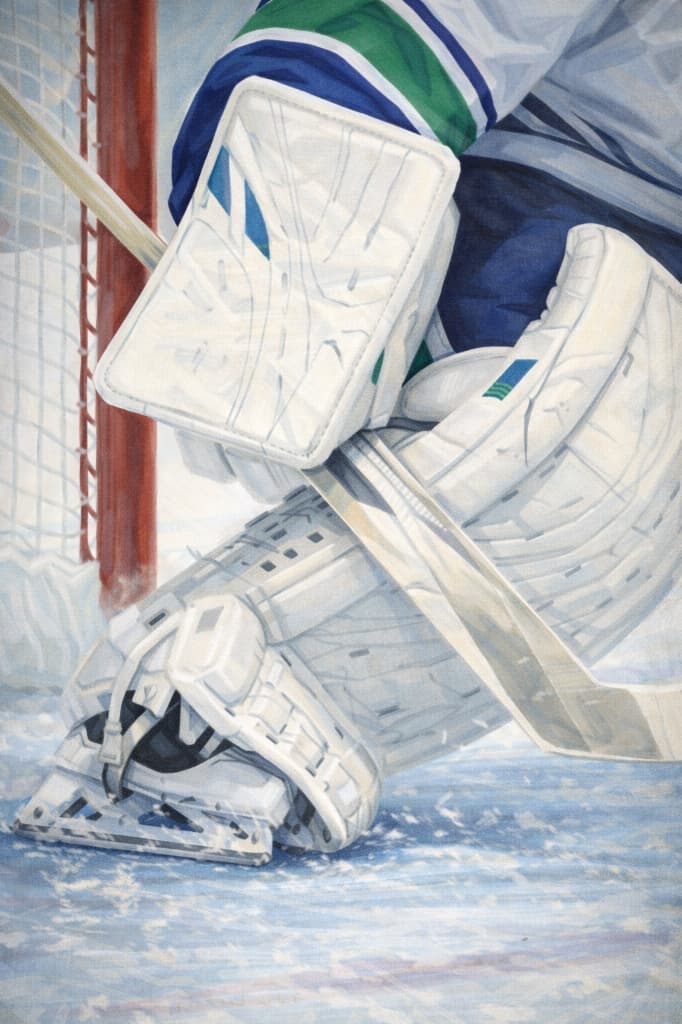
Imagine standing on steel blades in front of a 72-inch wide target. By 2004, NHL goalies had optimized for the wrong metric: coverage. Seeking an advantage, equipment began expanding—wide-cut jerseys, thigh risers, and massive chest protectors. The league recognized that the position was prioritizing coverage over athleticism.
The NHL lockout of 2004-05 introduced a necessary correction. Regulations reduced equipment size, forcing a return to skill. This illustrates the paradox: when data is over-optimized (explicit knowledge), the body's ability to react (tacit knowledge) is overridden[2]. Innovation was born from the removal of excess material.
THE
MACHINE
Consider the air-cooled Porsche 911. By modern metrics, it is inefficient. It is loud, mechanical, and requires physical effort to drive. Yet, it is revered above modern supercars. Why? Because it prioritizes input over output. The modern vehicle isolates the driver from the road; the analog machine forces a conversation with it.
This mindset prefers the friction of the air-cooled engine to the silence of the algorithm. Systems must be built to restore this mechanical connection to the work. The goal is not to eliminate friction, but to optimize it. The resistance of the chassis tells the driver where the limit is; the resistance of the process tells the creator where the truth is.
THE THESIS
Common Intellectual Creators exists to build architecture. Innovation is born from specific constraints. Unlimited optionality leads to the "Paradox of Choice," creating anxiety rather than liberation. To reclaim creative agency, the requirement is not more tools, but stricter boundaries.
Just as a soldier requires a weapon and a carpenter requires a hammer, the modern creator requires an operating system for their attention. By reducing the logistical drag while preserving the creative struggle, the link between the mind and the hand is restored.